Advertisements
Can a fuel change the way you fly and help achieve net zero by 2050?
Today Aviation contributes approximately 21.3 trillion tons of global CO2 emissions, and transport accounts for 121.3 trillion tons. Even so, the goals are clear: CORSIA maintains stable net emissions, and the sector aims for net zero by 2050.
He sustainable aviation fuel (SAF) is key because it is a drop-in fuelIt mixes with jet fuel and it works with the current engines and infrastructure.
That change is already happening: more than 360,000 commercial flights have used SAF and production grew to ~1.9 billion liters in 2024. Studies show lifecycle GHG reductions of up to 94%, depending on route and raw material.
In the United States, public policies, airline commitments, and DOE goals are creating momentum for scaling up cleaner aviation fuel. This article will show you how SAF works, its benefits, and what to expect in the immediate future.
Key findings
- Aviation is aiming for net zero by 2050 with real tools today.
- The SAF is compatible with existing aircraft and infrastructure.
- It can reduce up to 94% of CO2 emissions over its life cycle.
- There are already hundreds of thousands of flights and policies that promote its adoption.
- Purchase commitments and public goals are vital to scaling up production.
Current overview: emissions, trends and the race towards net zero
To understand the path to net zero, first look at how much of a footprint the aviation sector leaves. Aviation contributes approximately 2% of CO2 emissions globally and the 12% within transportReducing this directly improves air quality.
CORSIA freezes the sector's net CO2 emissions at 2020 levels until 2035. In addition, in CAAF/3, the States agreed that aviation fuel will be 5% less carbon-intensive by 2030.
Market advances, figures and signals
Today the supply of alternative fuel remains small: ~1.9 billion liters in 2024, around 0.53% of total consumption.
- Policies: 44 states with rules that favor the use of SAF.
- Commitments: 50 airlines represent 40% of traffic with offtake agreements for 2030.
- Operation: More than 360,000 commercial flights have already used SAF on real routes.
The lesson It's clear: sustainable aviation relies on aviation fuel "drop-in," which avoids changing fleets or airports and accelerates adoption. But achieving net zero by 2050 requires more production, coordinated regulations, and strong demand that signals investment.
What is SAF and how does it bring you closer to sustainable aviation?
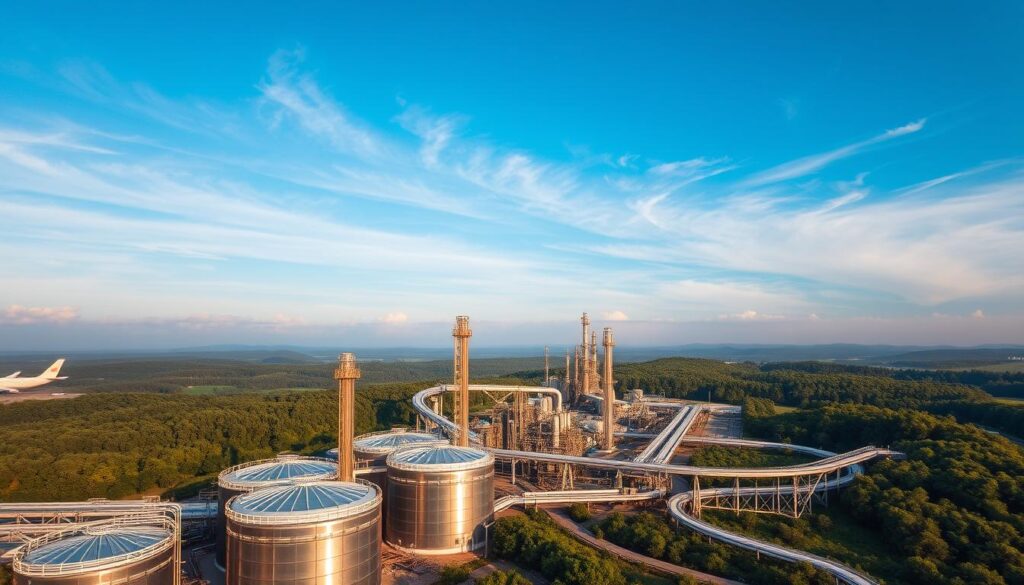
A "drop-in" fuel system allows emissions to be reduced without replacing fleets or airports. He sustainable aviation fuel (SAF) is an alternative fuel made from non-petroleum materials. It was designed to be blended with conventional jet fuel and maintain safety and performance in aircraft.
Definition and limits of mixture
SAF is mixed with Jet A with a blend limit which today varies between 10% and 50% depending on the route and ASTM approval. Conventional jet fuel is still present in the mix while certifications progress toward higher percentages.
Benefits and performance
The benefits are clear: in lifecycle the SAF can cut between 80% and 94% of CO2 depending on feedstock and process. In addition, it uses existing infrastructure, which streamlines its use today.
- Compatible with current motors and supply networks.
- Validated in laboratory, ground and flight (thousands of tests).
- Since 2011, more than 225,000 commercial flights have been recorded with SAF.
What is made and how is it produced: ASTM-approved feedstocks and routes
The ingredients used to manufacture SAF range from recycled oils to municipal waste. This defines the technology, cost, and blend limit that can be applied to each jet fuel blend.
Key sources
Feedstocks Typical ones include municipal solid wasteCellulosic waste, used cooking oil and other oils and fats, algae and energy crops such as camelina or jatropha.
These sources affect availability and price. Solid waste and MSW fractions are valuable because they increase production without competing with food.
Technological pathways and mixing limits
ASTM D7566 lists approved routes and their blend limits. These include:
- HEFA-SPK (up to 50%) from oils and greases.
- FT-SPK / FT-SPK/A (50%) from biomass and municipal solid wasteFT-SPK/A adds aromatics to meet specifications.
- ATJ-SPK (30–50% according to alcohol and annexes) and HFS-SIP (10%) from sugars/ethanol.
- CHJ (50%) from triglycerides and co-processed in D1655 (up to 5%).
Capacity, producers and certification
Today there are commercial plants such as World Energy, Neste and Montana Renewables that already supply airports in the US. Consumption rose from ~5M gal (2021) to 24.5M (2023), showing growth in production and demand.
ASTM D7566 D1655 and D1655 guarantee that these aviation fuels perform as well as jet fuel in laboratory, ground, and flight tests. Therefore, airports prefer upstream certified products for traceability and quality.
From the plant to the airport: distribution, mix, and scaling models
The fuel route from the plant to the runway determines how the SAF is integrated into daily operations.
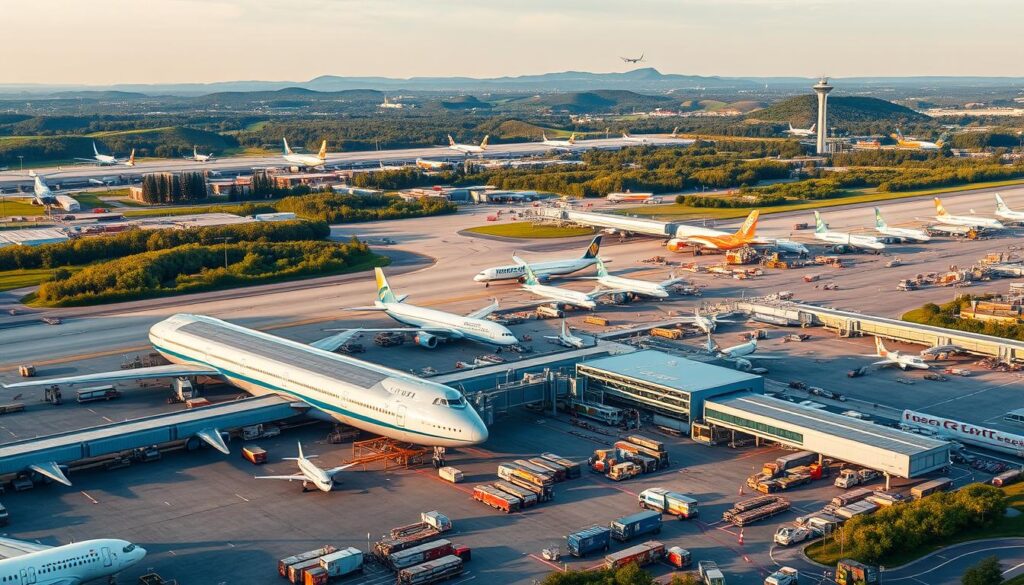
The SAF must be mixed with Jet A before its use. If it is co-processed in a refinery, it enters the normal chain and travels by pipeline to terminals and then to airports.
When it comes from biorefineries, it is usually blended at upstream terminals. From there it is sent by pipeline, truck, or barge to the airport without changing the infrastructure or onshore operations.
Logistics and certification
Mixing at the airport is not efficient: it requires additional equipment, staff, and insurance.
That's why it's preferable to certify the product as ASTM D1655 before the delivery point. This way, the aviation fuel arrives ready and reduces operational friction.
Book-and-claim: Accelerate deployment
The book-and-claim model allows you to buy SAF where production is most competitive and claim the CO2 credit.
Physically, the fuel can be used at an airport near the plant while you get the environmental attribute for your purchase.
- Advantage: It replicates the flow of the conventional jet and facilitates supply without altering infrastructure.
- Impact: It supports production hubs and reduces initial logistics costs.
- Challenge: It demands traceability, governance, and robust verification in the industry.
Economics, policies and challenges: from current costs to mass production
The price difference between kerosene and renewable fuels condition investments and supply.
Today the sustainable aviation fuel It costs approximately 2x facing the conventional jet fuel when it comes from waste. For synthetic solutions with carbon capture, the price rises to 6–10x.
Price, offer and purchase agreements
The airlines They have signed offtake agreements for approximately 6 billion liters. These contracts reduce risk and help scale up production. production.
Public impetus
In the US, the Grand Challenge aims for 3 billion gallons in 2030 and 35 billion in 2050 with a ≥50% reduction of coal.
In addition, 44 states already have policies in place that facilitate permits, loans, and priority for alternative fuels.
Scale and investment
ATAG estimates 5,000–7,000 renewable fuel plants by 2050. This requires feedstocks insurance, low-carbon energy and technical talent.
- Key challenge: allocation of oil, oils and greases used between sectors.
- Socioeconomic benefit: up to 14 million direct or converted jobs.
- Need: mandates, incentives, and verification to attract capital and lower costs.
Conclusion
A real reduction in CO2 emissions from air transport will require measurable changes in fuel production and use. He sustainable aviation fuel and other certified aviation fuels have been operating in actual flights since 2011, with hundreds of thousands of flights and ASTM routes. blend limit between 10% and 50%.
Today, global production represents approximately 0.531 trillion metric tons of airline fuel, but there are purchase commitments, policies in 44 countries, and ambitious targets (3 and 35 billion gallons). Scaling up production requires ensuring feedstocks such as municipal solid waste, used oil and crops, more clean energy and clear governance.
If you want to support this shift, promote long-term contracts, financing for new plants, and feedstock traceability. With more SAF (Supply-Fuel Alcohol) and increasing blends, fossil kerosene will gradually lose ground in jet fuel, and aircraft and airports will be able to reduce CO2 emissions without major operational changes.
FAQ
Why will air travel be more sustainable in the future?
Because the industry is changing the way you fly by using alternative fuels, improving aircraft efficiency, and implementing policies like CORSIA and net-zero commitments by 2050. These advancements reduce emissions per passenger and allow your flights to generate less CO2 over time.
What is the current situation regarding aviation emissions?
Today, aviation accounts for approximately 21 1/3 metric tons of global CO2 emissions and around 121 1/3 metric tons of global transport emissions. Although total emissions have historically increased, there are measures and targets—such as reducing carbon intensity by 51 1/3 metric tons by 2030—that aim to stabilize and then lower these figures.
What is CORSIA and how does it affect your flights?
CORSIA is an international scheme to limit the net growth of aviation emissions through offsets and technical measures. For you, this means that airlines must account for and offset emissions from international flights, encouraging the adoption of cleaner fuels and efficient operating practices.
What is SAF and why does it matter for your travels?
Sustainable Aviation Fuel (SAF) is a drop-in compatible alternative fuel for conventional jets. It allows you to fly with up to a 50% mix today and reduces lifecycle emissions by between 80% and 94%, depending on feedstock and route, using existing infrastructure and engines without major modifications.
How are SAF products produced and what raw materials are used?
SAFs are made from feedstocks such as municipal solid waste, cellulosic waste, used oils and greases, algae, and energy crops. There are ASTM-approved routes, including HEFA-SPK, FT-SPK, ATJ-SPK, and co-processing, that transform these materials into aviation-grade fuels.
What mixing limits exist and what do they mean for your banknotes?
The current mix limit typically reaches up to 50%, depending on the route and certification. In practice, a higher mix allows for greater emissions reductions per flight, but the limited supply and price of the SAF influence how much it is used on each route and how that is reflected in fares and operations.
Who produces SAF today and where is it most consumed?
Today, producers like Neste, World Energy, and Montana Renewables (among others) supply SAF. The largest consumption is concentrated in the United States and Europe, with sustained growth projected through 2024; however, capacity remains limited compared to global demand.
How is the safety and compatibility of the SAF certified?
SAFs are tested and certified under ASTM D7566 standards and, in combination with D1655, verified for use in commercial flights. These standards ensure that performance in engines and systems is equivalent to conventional jet fuel.
How does the SAF get from the plant to the airport?
The fuel is transported by pipeline, ship, rail, or truck to depots at airports, where it is mixed with Jet A. Terminals and operators implement quality controls to ensure compliance before supplying the fuel to aircraft.
What is the book-and-claim mechanism and why is it useful?
Book-and-claim allows SAF usage to be accounted for even if it's not physically delivered to every airport. By purchasing SAF from a single facility and claiming the reductions, you can accelerate market adoption and support while infrastructure and logistics expand.
Why does SAF cost more than conventional kerosene?
Currently, SAF costs between 2x and 6-10x more than kerosene due to raw material costs, conversion processes, and limited scale. Offtake agreements and government subsidies aim to reduce this price difference over time.
What public support exists to make SAF more affordable?
Initiatives like the Grand Challenge in the US, along with tax incentives and policies in over 40 states, promote production and demand. These policies facilitate investment, increase supply, and can lower prices, benefiting both airlines and passengers.
How much capacity will be needed to decarbonize aviation?
Studies suggest that thousands of plants and a major expansion of refineries and biorefineries will be needed—between 5,000 and 7,000 facilities by 2050 in different scenarios—in addition to investment in talent, logistics, and responsible allocation of feedstocks.
What barriers still exist to scaling up the use of SAF?
The main challenges are the limited supply of sustainable feedstocks, the investment required for facilities, the high cost compared to kerosene, and the need for greater logistical infrastructure. Ensuring the actual sustainability of the materials used is also key.
How can you support the transition to lower-emission flights?
You can choose airlines with clear commitments to using sustainable fuels, participate in recognized offset programs, and support public policies that fund production and deployment. Your travel and consumption choices can accelerate responsible demand.